
Equity markets will take cues from global trends and trading activity of foreign investors, while in the latter part of the week the first quarter earnings from IT majors TCS and HCL Technologies would guide investor sentiments, analysts said. Markets may consolidate after the record rally last week, experts added. "On the domestic front, the Q1 earnings season begins this week. Key companies such as TCS and HCL Technologies will release their earnings on July 11 and 12, 2024, respectively.

Among the Sensex firms, Mahindra & Mahindra, Bharti Airtel, ICICI Bank, IndusInd Bank, Reliance Industries, Axis Bank and HDFC Bank were among the major laggards. Titan, Kotak Mahindra Bank, Asian Paints, HCL Technologies, Tech Mahindra, NTPC, Nestle and Power Grid were the major gainers.
The liquidity will move into deficit after advance tax payments and GST outflows. It will rebound in October because of government spending.

Market participants attribute the stability to the Reserve Bank of India's timely intervention in the foreign exchange market, both in terms of selling and buying dollars.

The US Fed interest rate decision, domestic inflation data and global trends would be key driving factors in dictating movement in the market this week, as the Lok Sabha elections outcome and the RBI policy decision are behind us, analysts said. The past week was a roller-coaster ride for investors as markets swung sharply in both directions before closing with strong gains.

Invest with a 5 to 7 year horizon so that you are able to ride out price volatility and benefit from the long-term trends of demand and macroeconomic shifts.

'A 10 to 15 per cent allocation to gold in portfolios reduces risk without compromising on potential returns.'

Global investors have been cautious this year to put money into Indian real estate, as private equity inflow is down 44 per cent till December 12 to $3 billion compared to the entire previous year, according to Knight Frank. Real estate consultant Knight Frank India on Thursday released its data showing that the Indian real estate market received $3,024 million in PE investments from 23 deals between January 1 and December 12 this year, as against $5,357 million recorded in 2022.

From the Sensex pack, Adani Ports & Special Economic Zones, Mahindra & Mahindra, Reliance Industries, HDFC Bank, Larsen & Toubro, NTPC, State Bank of India, UltraTech Cement and Kotak Mahindra Bank were the major gainers. In contrast, Tata Steel, Titan, Bajaj Finserv, JSW Steel, Bajaj Finance, Hindustan Unilever, ITC, Tata Motors and Tata Consultancy Services were among the laggards.
As the results season kicks in, the quarterly earnings numbers of several blue-chip firms -- such as Infosys and Reliance Industries -- along with global trends and trading activity of foreign investors, will determine equity market movement in the holiday-shortened week ahead, according to analysts. The domestic WPI inflation data for June -- scheduled to be announced on Monday -- will also influence trading sentiments, traders said. Markets will remain closed on Wednesday for Muharram.

'When interest rates rise, the NAVs of these funds will fall.' However, they won't fall as much as longer-duration funds.
The Reserve Bank is likely to maintain status-quo on the key interest rates for the third time in a row in its upcoming bi-monthly policy review despite the US Federal Reserve and the European Central Bank hiking benchmark rates, as domestic inflation is within the RBI's comfort zone, say experts. The borrowing cost which started rising in May last year has stabilised with RBI keeping the repo rate unchanged at 6.5 per cent since February when it was raised from 6.25 per cent. In the previous two bi-monthly policy reviews in April and June the benchmark rate was retained.

'Young investors should focus more on equity, while retired senior citizens should prioritise fixed income.' 'Mid-career investors should aim for a balanced allocation.'

'Retail investors, who had not seen such a massive correction in the SMID universe since COVID-19, are witnessing something like this for the first time. Panic profit booking may continue.'

A trends study conducted by India's Financial Intelligence Unit (FIU) has expressed suspicion that cryptocurrency is being used across the country in serious criminal acts like terrorist financing, fuelling secessionist activities, cybercrime, narcotics trafficking, illegal betting and gambling. The report, which was based on suspicious transaction reports and operational analysis, shared these trends and credible intelligence with law enforcement agencies.

The index could be vulnerable to a bigger fall given the present market dynamics.
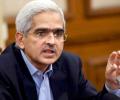
The December meeting of the Reserve Bank of India's (RBI's) six-member Monetary Policy Committee (MPC) will start on Wednesday even as there is no clarity on whether Governor Shaktikanta Das, the chair of the panel, will continue in office after his term ends next week. The outcome of the meeting will be announced on Friday by Das at 10 in the morning.
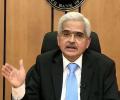
The Reserve Bank of India on Wednesday decided to keep the policy rate unchanged for the tenth time in a row but changed its stance to 'neutral' that may lead to a cut in the forthcoming policies. RBI maintained status quo despite the US Federal Reserve lowering the benchmark rates by 50 basis points last month.

The US Federal Reserve on Wednesday (local time) raised interest rates by 75 basis points (bps) or three-quarters of a percentage point in the boldest move since 1994.

The Reserve Bank of India's (RBI's) draft guidelines on gold loans, if implemented in their current form, are expected to impact non-banking financial companies (NBFCs) and mid-tier banks in the near term, more significantly than larger banks, according to analysts.
Domestic macroeconomic data announcements, global trends and trading activity of foreign investors would guide market sentiments this week, analysts said. After a record rally, markets may face volatile trends this week amid elevated valuations and investors would also keep a track of global oil benchmark Brent crude and rupee-dollar movement for further cues. "Potential volatility in the stock market is anticipated this week. Elevated valuations remain a concern, with investors now focusing on monsoon progress and its impact on the rural economy.

This was Rana's last legal chance not to be extradited to India. Earlier, he lost a legal battle in several federal courts, including the US Court of Appeals for the North Circuit in San Francisco.

Inflows into gold exchange-traded funds (ETFs), which manage a total of Rs 37,390 crore, have surged sharply in recent months. This trend is likely to continue, especially after the reintroduction of long-term capital gains tax (LTCG), which is likely to attract smart money into mutual fund offerings amid a robust outlook for the yellow metal. Smart money, also known as opportunistic flows, refers to strategic investments that are generally of a short-term horizon.

'A possible post-election growth momentum may be lost.'

Congress Parliamentary Party chairperson Sonia Gandhi has criticized the Waqf (Amendment) Bill, calling it a 'brazen assault' on the Constitution and part of the BJP's strategy to keep society in a 'permanent state of polarization.' She also spoke out against the One Nation, One Election Bill, calling it a 'subversion of the Constitution.' Gandhi further accused the Modi government of ignoring the women's reservation bill and other demands for reservation, and of 'dragging the country into an abyss' where the Constitution will only exist on paper. She also criticized the government for limiting the speaking time of the Leader of the Opposition in Parliament and for not allowing discussions on important issues like the working of the defense and external affairs ministries and the challenges posed by China on the border.

The Enforcement Directorate (ED) conducted raids on the premises of Rajasthan Congress leader and former minister Pratap Singh Khachariyawas and Punjab AAP MLA Kulwant Singh as part of a money laundering probe linked to the Rs 48,000-crore PACL Ponzi scam. Khachariyawas, who served as a minister in the Ashok Gehlot government, claimed the ED action was politically motivated due to his criticism of the government. Singh, a real estate promoter, is reported to be Punjab's richest MLA with assets worth Rs 1,000 crore. The ED has been investigating the PACL scam since 2015, alleging that the company defrauded investors of Rs 48,000 crore through fraudulent investment schemes.

When evaluating bonds, returns shouldn't be the sole factor. Pay close attention to the bond's credit rating. It should ideally be AA or higher.

Announcement of macroeconmic data such as industrial production and inflation, the US Federal Reserve's interest rate decision along with trends in global equities would dictate movement in the stock market this week, analysts said. Besides, foreign fund trading activity would also guide the trends in equities. "All eyes are now on the US Fed policy outcome for cues, which is scheduled on June 14. In the following sessions, the European Central Bank (ECB) and Bank of Japan (BoJ) will also announce their policy decisions.

Foreign Portfolio Investors (FPIs) have pumped Rs 47,148 crore in the Indian equities in June, making it the highest inflow in 10 months, enthused by the country's steadily improving macroeconomic fundamentals. However, inflows in July may be subdued as FPIs might adopt cautious stance due to the recent comments from the US Federal Reserve, Mayank Mehraa, Smallcase manager and principal partner at financial consultancy Craving Alpha, said. Besides, VK Vijayakumar, Chief Investment Strategist at Geojit Financial Services, said FPIs are likely to turn a bit cautious going forward as valuations in the country are rich from a short-term perspective.

The central government is expected to complete the auction of the 5.9-million tonne (mt) lithium reserves discovered in the Reasi district of the northern Union Territory (UT) of Jammu & Kashmir (J&K) by the end of this calendar year, Union Mines Secretary Vivek Bharadwaj said on the sidelines of the launch of the Federation of Indian Chambers of Commerce and Industry (Ficci) report on 'New-Age Energy Minerals' on Tuesday. "Auction will be over by the end of this year," said Bharadwaj, adding, "We have already recommended a transaction advisor to the J&K government for the auction of lithium reserves." However, the exact timeline for an auction will be decided by J&K authorities, Union mines minister Pralhad Joshi said in Parliament last month.

The three day MPC meeting began on Monday and the decision will be announced on Wednesday by RBI Governor Shaktikanta Das.

Among the Sensex firms, IndusInd Bank, Tata Steel, Tata Motors, Sun Pharma, Infosys, Mahindra & Mahindra, Infosys, NTPC, Bharti Airtel, HCL Technologies and Axis Bank were the biggest gainers. Tech Mahindra and Bajaj Finance were the laggards.

Indian government bonds, particularly those of shorter maturity, strengthened sharply on Monday, as the collapse of the California-based Silicon Valley Bank (SVB) prompted investors to rush to the safety of American debt, leading to a decline in US bond yields.

'Our growth in banking, financial services, and insurance (BFSI) is a prime example.'

'Future market gains will likely depend primarily on earnings growth.'

Management commentary on demand environment, and forward guidance will be in focus when Indian IT services players declare their September quarter results for financial year 2024-25 (Q2FY25). The industry is exepected to have continued on the path of recovery in Q2, similar to the preceding quarter, rather than sprint towards growth. The top four firms likely grew between 0 per cent and 4 per cent year-on-year (Y-o-Y), according to consensus estimates.

Tahawwur Rana, a Canadian citizen and native of Pakistan, was extradited to India to face charges related to his alleged role in the 2008 Mumbai terror attacks. The US Department of Justice said Rana allegedly commended the LeT terrorists who carried out the attacks and suggested they should be awarded Pakistan's highest gallantry award. Rana is accused of facilitating a fraudulent cover for his childhood friend, David Headley, to conduct surveillance in Mumbai for the Lashkar-e-Taiba (LeT) terrorist group. He is also accused of helping Headley submit false visa applications to Indian authorities. This extradition follows a lengthy legal process that began in 2020 with India's request for Rana's surrender. Rana, who was previously convicted in the US for providing material support to LeT, will now face trial in India on 10 criminal charges related to the Mumbai attacks.

'GenAI programmes may not be large in terms of value, but have triggered a lot of new opportunities among clients.'

Federer may have set the benchmark on how to do tennis retirements. He didn't go out in a blaze of lonely glory but in the warmth of friendships formed over the years, observes Deepti Patwardhan.

Stock markets will be driven by domestic inflation data, ongoing quarterly earnings from corporates and global trends this week, analysts said. News flows around the general election would also be tracked by investors, market experts said.
